What is a bike wall mount and how does it work?
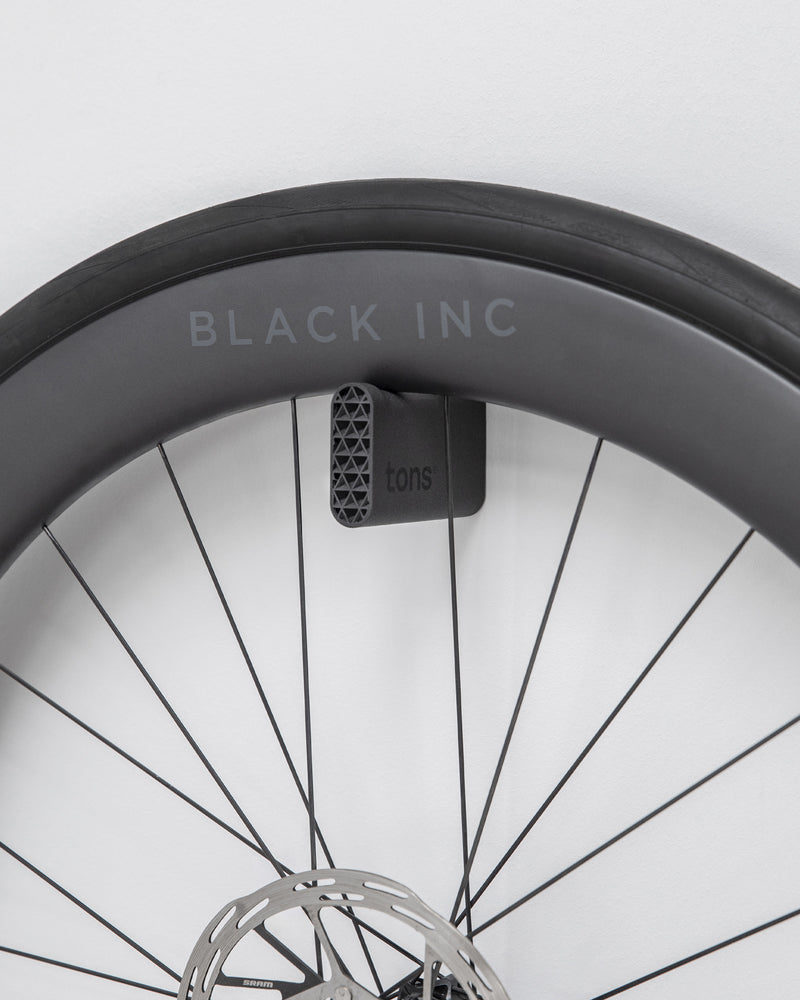
A bike wall mount is a fixed solution that holds the bike off the ground by supporting either the frame, wheel or pedal.
Instead of leaning the bike against a wall or placing it on the floor, the weight is transferred into the wall through mounting points designed to keep it stable over time. This creates a consistent storage position and reduces the need to constantly move or adjust the bike between uses. In simple terms, it acts as a wall hanger for the bike rather than a floor-based rack.
Vertical and horizontal bike wall mounts explained
Some setups prioritise access. Others prioritise space.
A horizontal wall mount keeps the bike parallel to the wall, making it easy to grab and visually integrated into the room. A vertical mount shifts the orientation, storing the bike upright to minimise how much floor area it occupies.
Neither approach is inherently better, but they solve different constraints depending on how the space is used.
When does a vertical bike wall mount make sense?
In smaller rooms, the limiting factor is rarely height. It’s width.
A vertical bike wall mount reduces the horizontal footprint by turning the bike upright, which makes it easier to place it in narrow layouts like hallways or compact storage areas. It’s also a practical approach in garages where multiple bikes need to be stored without overlapping.
Where you place the bike often matters more than how it hangs.
In apartments, the goal is usually to reduce visual noise while keeping the bike accessible. A wall-mounted setup can turn the bike into part of the interior rather than something stored away. This makes it a practical bike wall mount storage solution in smaller spaces.
In homes, placement tends to be more flexible, which makes it easier to balance access with how the bike fits into the room.
Garages follow a different logic. Here, it’s less about appearance and more about function: quick access, durability and the ability to store multiple bikes without them getting in the way.
From bike storage to a complete setup
A bike on the wall solves one problem. The rest of the setup is usually still scattered. Shoes, helmet, glasses and smaller items often end up placed around the room without a fixed position, which breaks the flow of an otherwise structured space.
When storage is approached as a system instead of individual solutions, the setup becomes easier to maintain over time.
This is where combining a wall mount with dedicated gear racks starts to make sense — not as an add-on, but as part of the same structure.
Materials, fit and compatibility
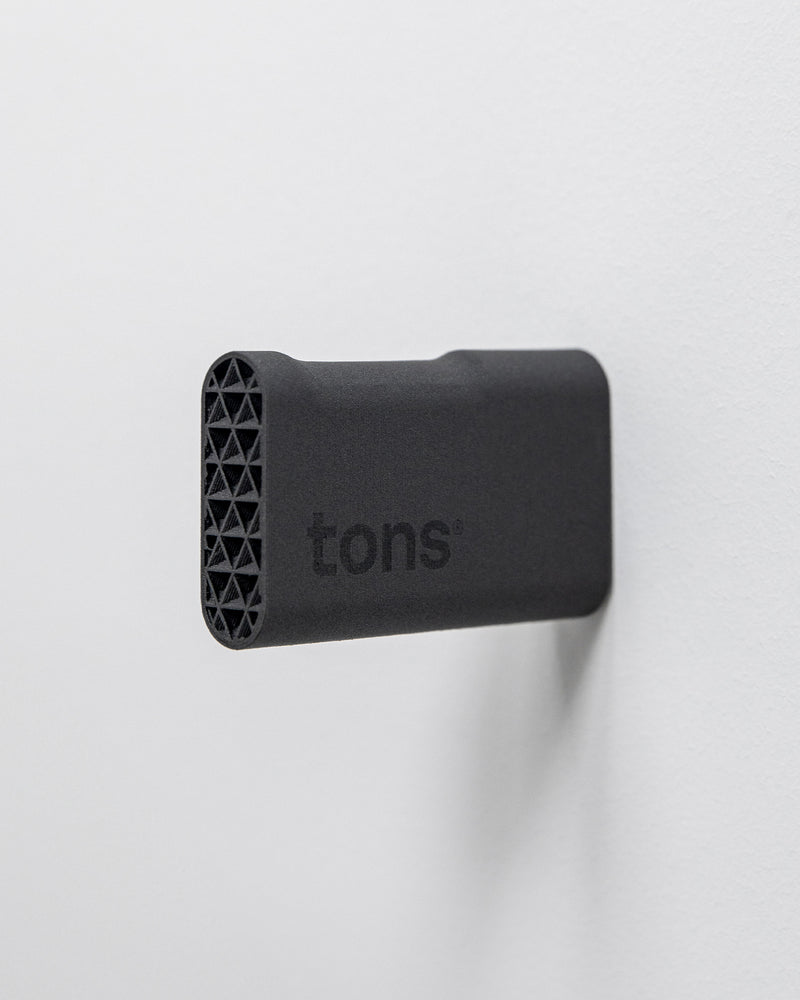
The way a Tons wall mount interacts with the bike depends on both its materials and the exact contact points in use. Across the range, the design is built around secure support and low visual weight, so the mount feels integrated into the space rather than bulky on the wall.
Tons wall mounts combine solid European oak with Tons Bio Polymer™, balancing rigidity, durability and a more minimal expression. Depending on the model, protection is built into either the rim or frame contact area through details such as an integrated rubber pad for rim protection or frame protection pads with anti-glide. This makes the mount feel more like a refined wall-mounted bike rack than a purely utilitarian storage product.
Compatibility varies by model rather than following one fixed standard. The Vertical Wall Mount fits most road, gravel and MTB bikes within defined rim and tyre limits, while the classic Wall Mount is built for most road and gravel bikes up to 56 cm handlebar width and 15 kg. The Angled Wall Mount is designed around pedal-based support and fits most road and gravel bikes, including a wide range of clipless pedal systems.
What to consider before mounting your bike on the wall
Not every wall or setup behaves the same. The wall itself needs to support the load, which means drywall often requires anchors or mounting into studs.
Available space also matters. Not just for the bike, but for lifting it into position and taking it down again.
Tyre width and overall weight can influence which type of mount works best, especially with heavier bikes or wider setups. Checking these constraints early avoids having to reposition or reinstall the mount later.