Why cycling gear storage rarely stays organised
A bike has a natural position. Gear doesn’t.
Helmets get placed on tables, shoes end up near the door and glasses move between rooms depending on when they were last used. Individually, each item takes up very little space, but together they create a setup that constantly needs resetting.
That’s what makes cycling gear storage different. It’s not about storing one object, but about creating a consistent system for multiple smaller elements that are used together.
A bike gear organiser for shoes, helmets and accessories
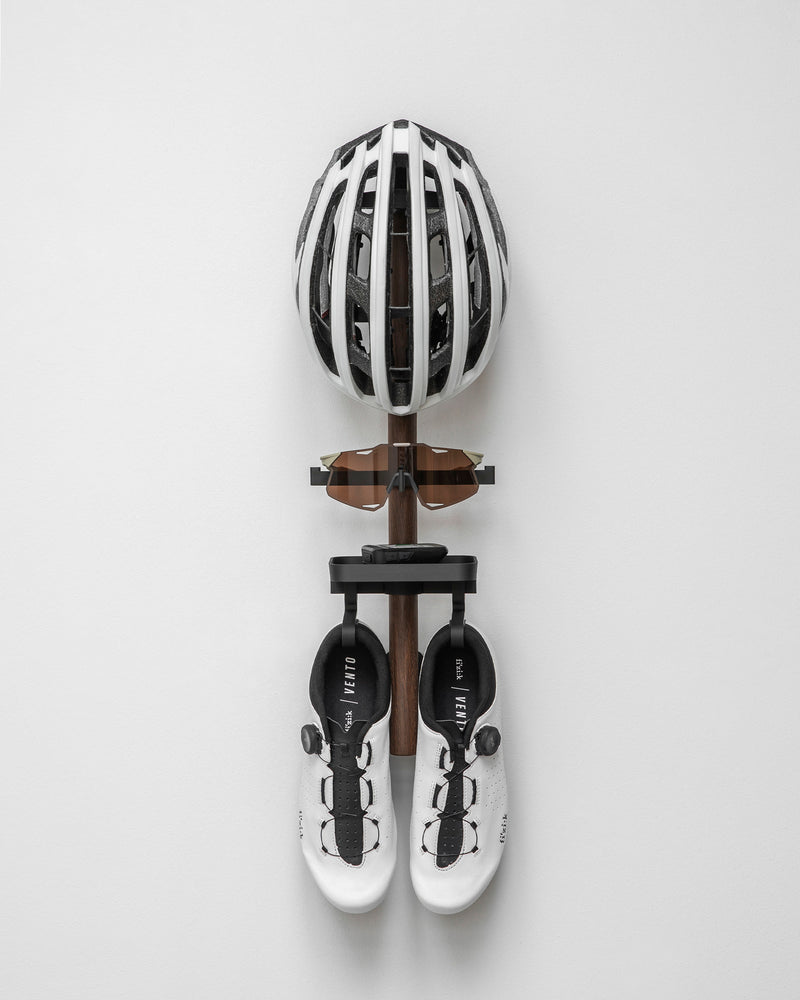
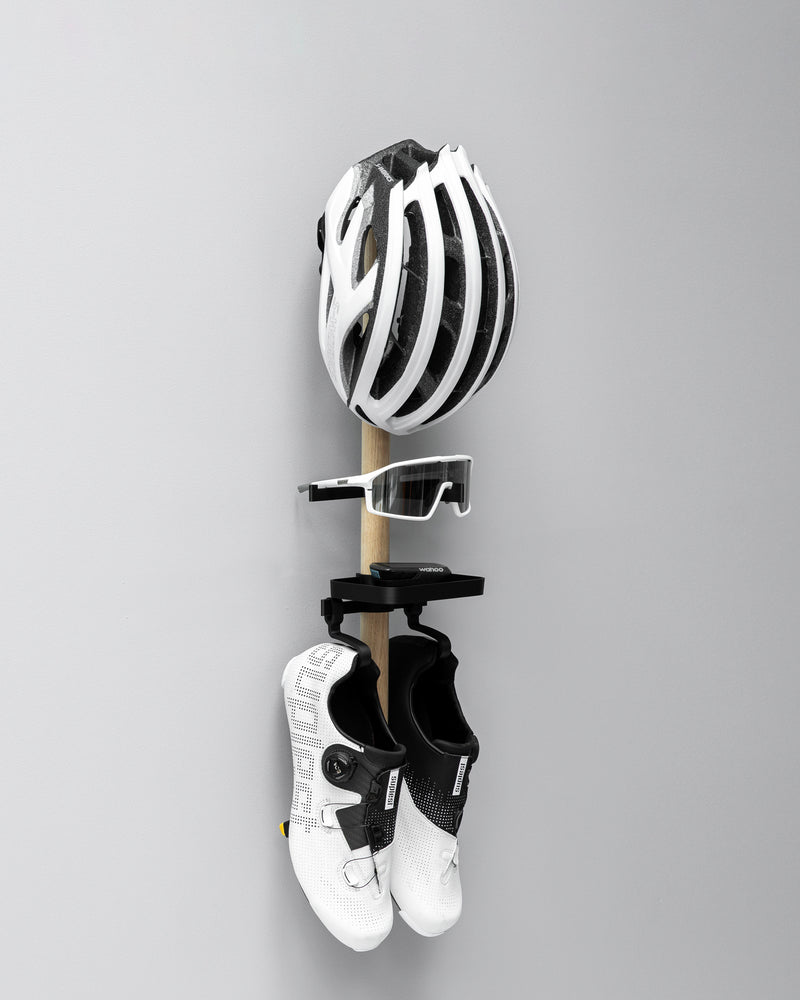
A gear rack works as a bike gear organiser by giving each item a defined position on the wall. Instead of spreading equipment across shelves or floors, everything is stored where it belongs and where it’s easy to reach before and after a ride.
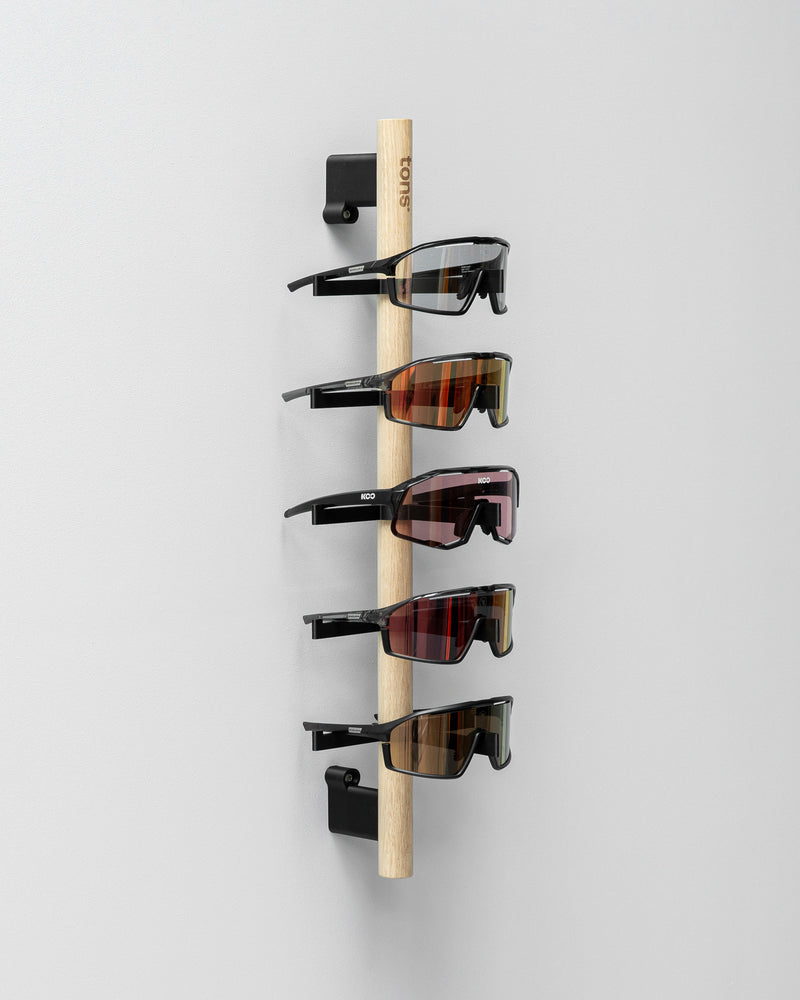
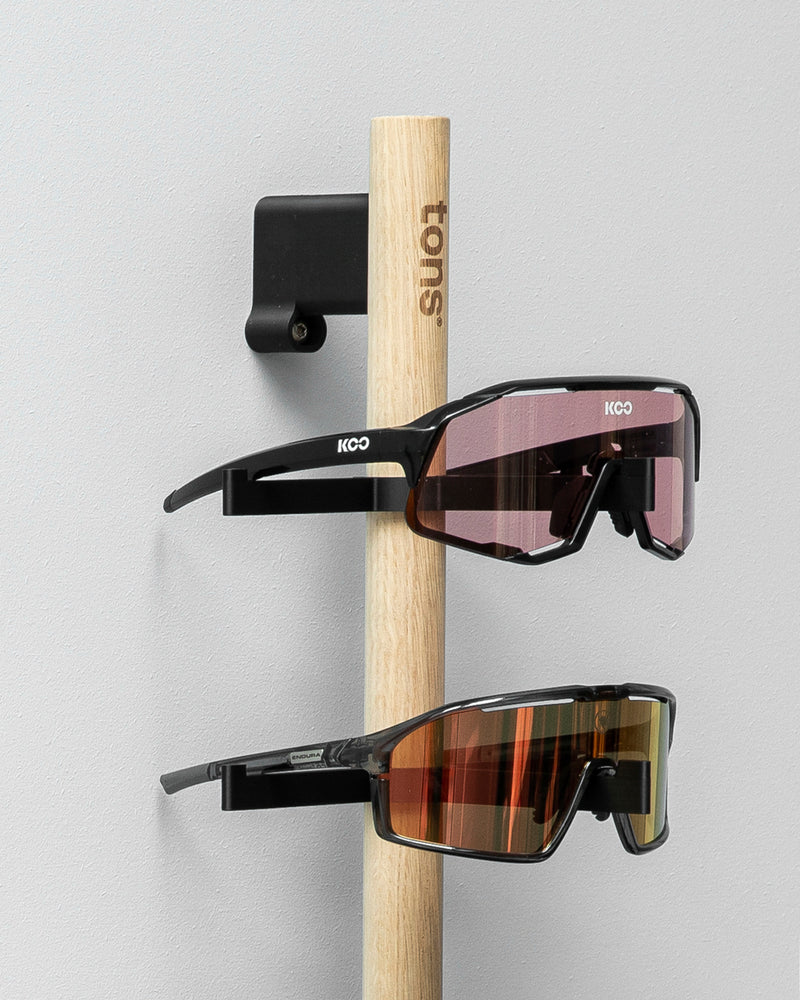
Different formats support different needs. Some racks are designed to hold a pair of shoes, a helmet and multiple pairs of glasses in one structure, while others focus on more compact setups with space for specific items like glasses or smaller accessories. Integrated trays add another layer, making it possible to store or charge a cycling computer without separate storage.
This also makes it a practical solution for bike helmet storage, keeping helmets protected and off shared surfaces.
Designed as part of a wall-based setup
Gear racks are rarely used in isolation. They tend to work best as part of a wall-mounted system where each element has a clear role.
The bike itself is usually stored separately using a wall-mounted bike solution such as a bike wall mount, which defines where the bike sits. Around it, organisers handle everything else. From helmet storage to shoes and accessories.
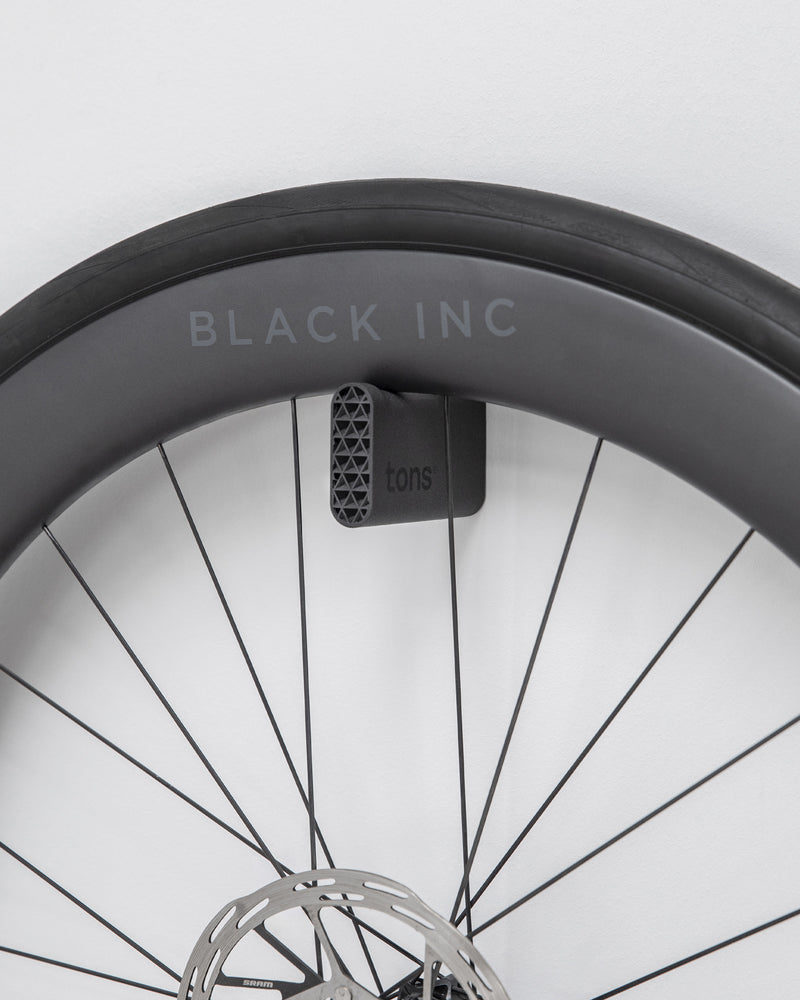
In some setups, this also includes solutions like a bike wheel hanger or a bike wheel wall mount for spare wheels. Together, these elements turn the wall into a structured storage surface instead of a temporary holding area.
Different formats for different setups
Not every setup needs the same type of bike gear rack.
Larger racks are built to hold multiple items at once, combining shoes, helmet storage and glasses in a single structure. These are often used where everything needs to be in one place.
More compact options, such as short racks or bars, focus on fewer items and take up less space, making them easier to place in smaller areas or as part of an existing setup.
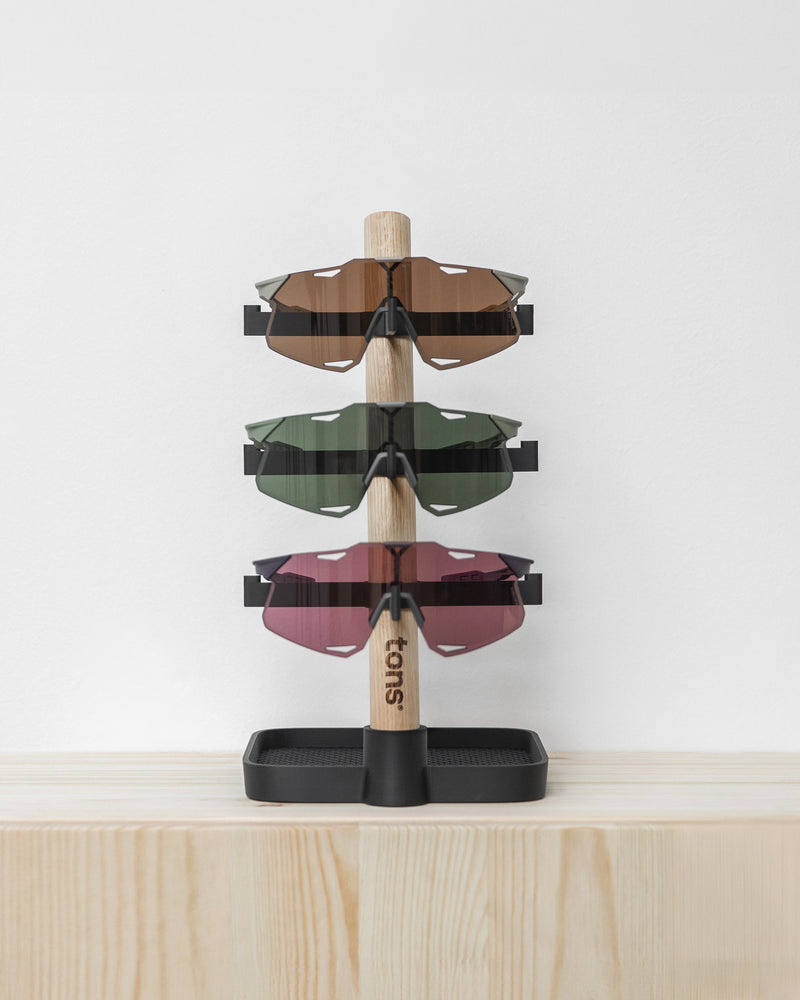
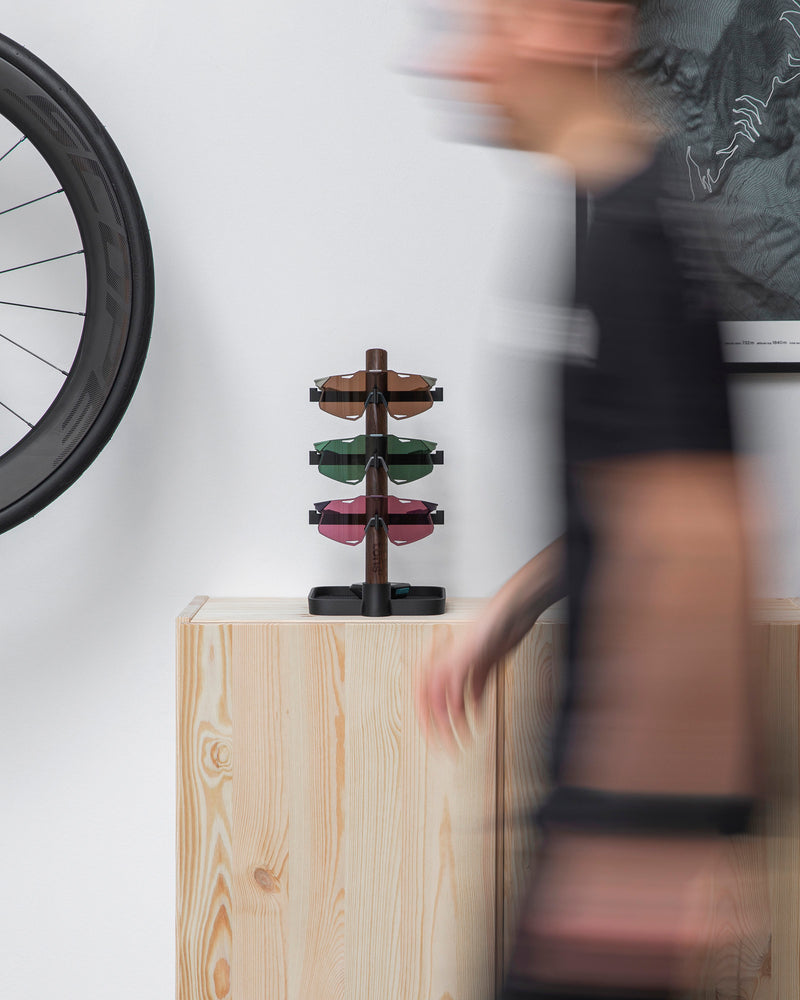
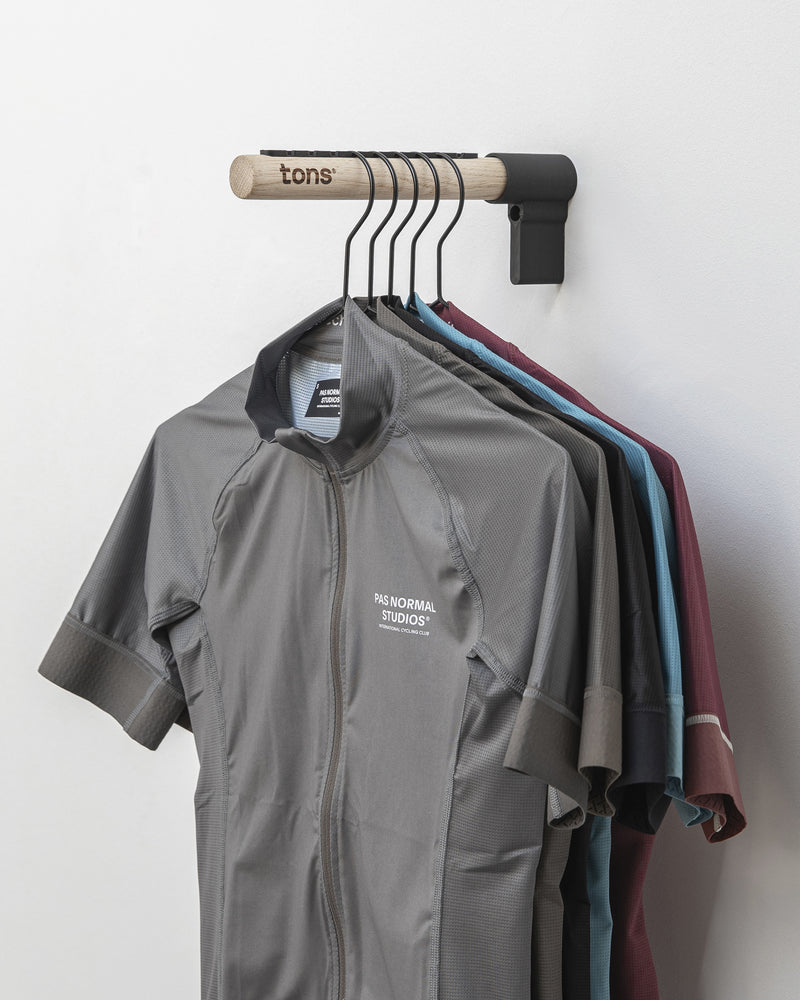
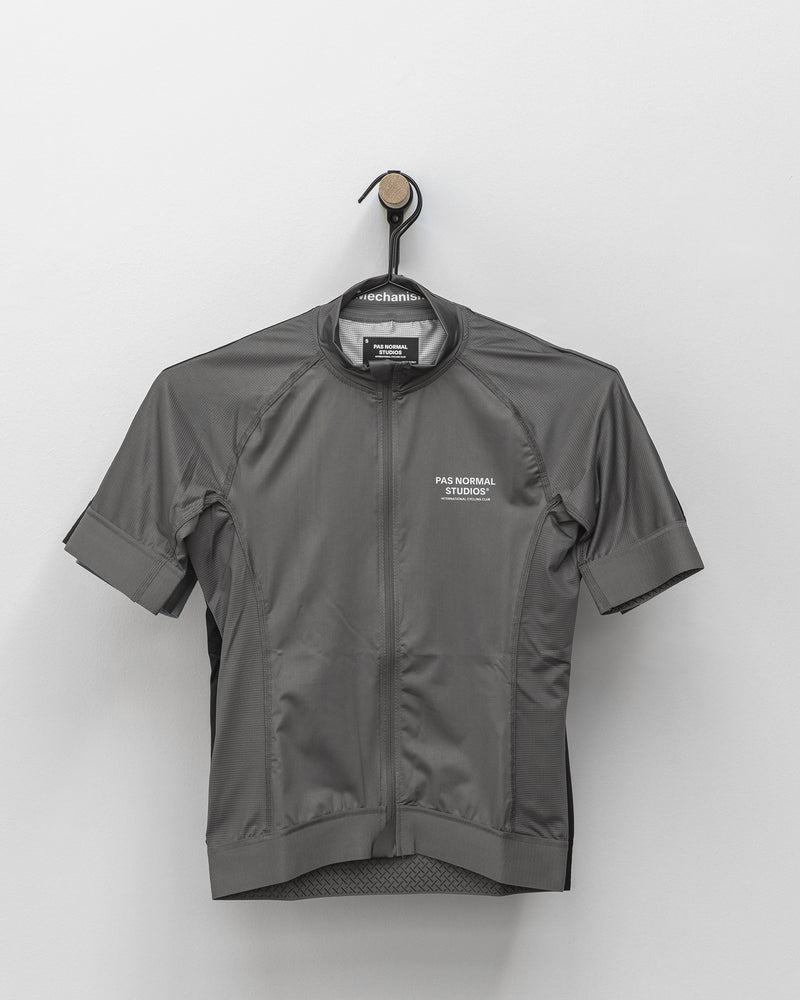
There are also specialised organisers designed for specific use cases, like storing multiple pairs of glasses vertically or keeping a jersey collection accessible without folding or stacking.
Materials and construction
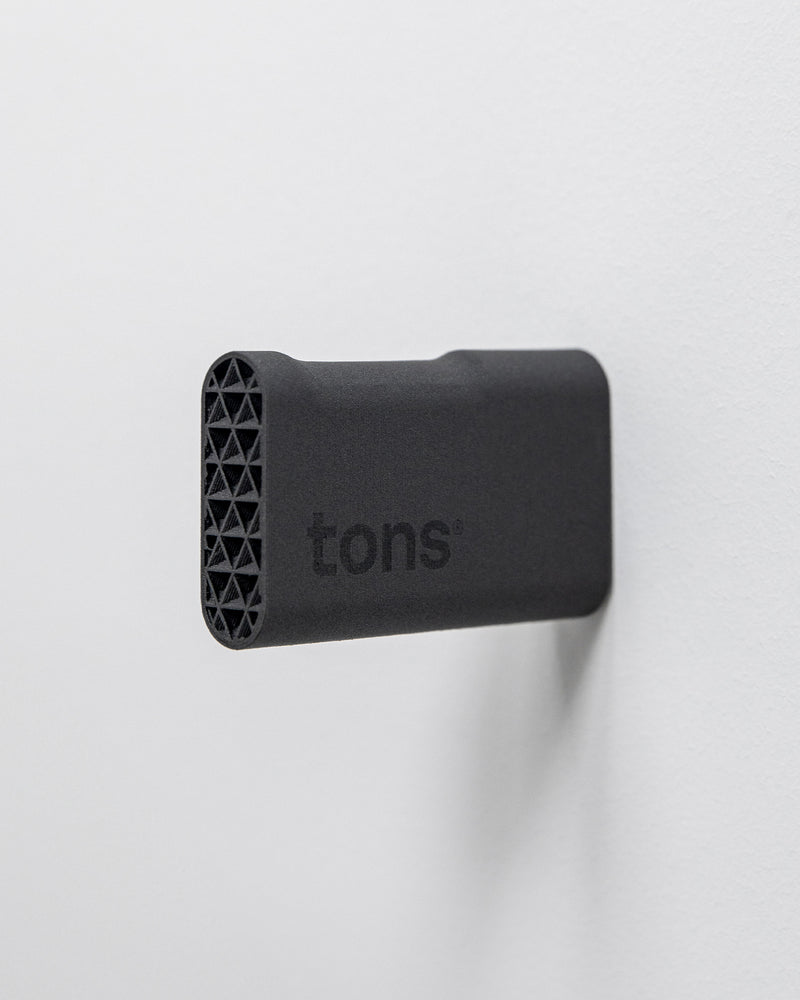
Tons gear racks are built using solid European oak combined with mounts printed in Tons Bio Polymer™. This combination keeps the structure rigid while maintaining a low visual weight on the wall.
Contact points are designed to support gear without damaging it, whether that’s holding shoes securely, keeping helmets stable or allowing glasses to rest without pressure on the lenses.
Depending on the product, installation can be done using screws for a fixed setup or adhesive solutions where drilling isn’t preferred. The result is a bike gear rack that functions as part of the space rather than something added onto it.
Where gear racks make the biggest difference
The impact of a gear rack depends less on the amount of gear and more on how the space is used.
In living spaces, it helps keep cycling gear organised without visual clutter. In dedicated training areas or pain caves, it creates a predictable layout where everything is within reach during sessions.
In smaller spaces, the effect is often more noticeable. Moving gear onto the wall frees up surfaces and makes the entire setup easier to navigate.